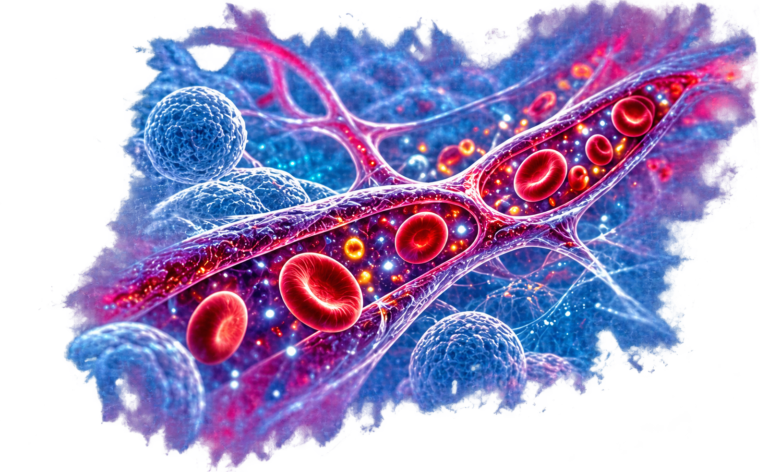

The three REAC Inside Blue Zone™ clinical protocols

Three protocols. A single sequence. There is only one principle: encourage the recovery of the mechanisms that time has altered.
Chronic silent inflammation, microcirculatory inefficiency and alteration of cellular metabolism are the three central biological processes in aging. Each protocol intervenes on one of these areas in a sequential and mandatory way, modulating endogenous bioelectric activity without introducing external substances or acting for substitution or compensation.

Protocol 01 · ACT-IBZ

Anti-Inflammation
Cellular Treatment

Restore the body's ability to resolve inflammation

Chronic silent inflammation is not an acute untreated inflammation. It's something more subtle: a condition in which the immune system remains in a state of persistent low-intensity activation, unable to complete its physiological cycle and return to balance.

This condition progressively alters immune regulation, metabolism, tissue perfusion quality, and neurovegetative systems. It does not produce obvious symptoms, but constitutes one of the most relevant biological substrates of age-related functional decay.

ACT-IBZ does not work by suppressing inflammation from the outside, as anti-inflammatory drugs do. It promotes the recovery of the mechanisms that allow the inflammatory response to complete its physiological cycle: activation, adjustment and resolution.

Through the modulation of endogenous bioelectric activity through asymmetrically conveyed radioelectric fields, ACT-IBZ supports the functional reorganization of the processes that keep chronic inflammation silent, bringing it back to its natural function: a dynamic, regulated and transient response.

Protocol 02 · CO-IBZ

Circulatory
Optimization

Restore the quality of the tissue microenvironment

Microcirculation is much more than a blood distribution system. It is the infrastructure through which each cell receives oxygen and nutrients, communicates with the vascular system and disposes of the products of metabolism. When this infrastructure loses efficiency, the entire tissue microenvironment is altered.

CO-IBZ does not act as a vasodilator and does not merely mechanically correct the flow. It intervenes on cellular processes that participate in microcirculatory regulation, in the dialogue between cells and the vascular system and in the balance between oxidative processes and the body's ability to control.

The recovery of circulatory efficiency is not imposed from the outside, but derives from a progressive reorganization of the regulatory mechanisms that govern the perfusion and adaptation of tissues. This is why CO-IBZ follows ACT-IBZ in the sequence: a tissue microenvironment that is still inflamed is unable to respond optimally to microcirculatory reorganisation.

Protocol 03 · MO-IBZ

Metabolic
Optimization

Restore cellular metabolic balance

Cell metabolism is the last link in the sequence, and the most dependent on the other two. A cell that operates in an inflamed and hypoperfused microenvironment develops over time compensatory metabolic adaptations: reduces energy efficiency, modifies functional priorities, enters a state of continuous compensation that limits its response capacity.

MO-IBZ does not introduce energy from the outside and does not artificially stimulate energy production. It intervenes on the bioelectric processes that regulate cellular metabolism, favoring the transition from a condition of dysfunctional adaptation to stress to a more regulated, efficient and stable metabolic state.

The goal is not to force the metabolism towards a higher performance, but to give it back the flexibility and consistency that time and dysfunctional adaptations have progressively reduced. MO-IBZ closes the sequence because it intervenes on a biological level that becomes accessible only after inflammation and microcirculation have been reorganized.

Because the sequence is mandatory

The three protocols are not interchangeable and cannot be executed in a different order. The sequence ACT-IBZ, CO-IBZ, MO-IBZ reflects precise biological logic: Each protocol creates the physiological conditions necessary for the next protocol to act effectively.
ACT - IBZ
ANTI - INFLAMMATION
CO - IBZ
CIRCULATORY OPTIMIZATION
MO - IBZ
METABOLIC OPTIMIZATION
  • Intervening on cellular metabolism without first addressing chronic inflammation and microcirculatory dysfunction means working on a system that is still disorganized, with less consistent and less stable results over time. The sequence is not an arbitrary choice: is the structure of the physiological path
27 sessions in total • 9 for each protocol

How the route takes place

  • 30 minutes per session
  • The patient is lying on the medical bed
  • ACP probes positioned on the femoral quadriceps
  • No specific preparation required
Flexible frequency
  • Maximum intensity

Up to 3 sessions per day with an interval of at least one hour between them.

  • Distributed over time

You can distribute the route according to your needs, maintaining continuity.

  • The flexibility in frequency does not replace the continuity of the route: The greater the regularity, the more consistent the body’s response.
© 1996-2026 Rinaldi Fontani Institute™ - Florence, Italy - All Rights Reserved - Privacy Policy

Choose your language

Choose your preferred language: