

15 May 2026
Silent inflammation and neurodevelopment: caring for the “terrain” to help children’s brains
Chronic low-grade inflammation can interfere with neurodevelopment in children with ADHD, autism and...
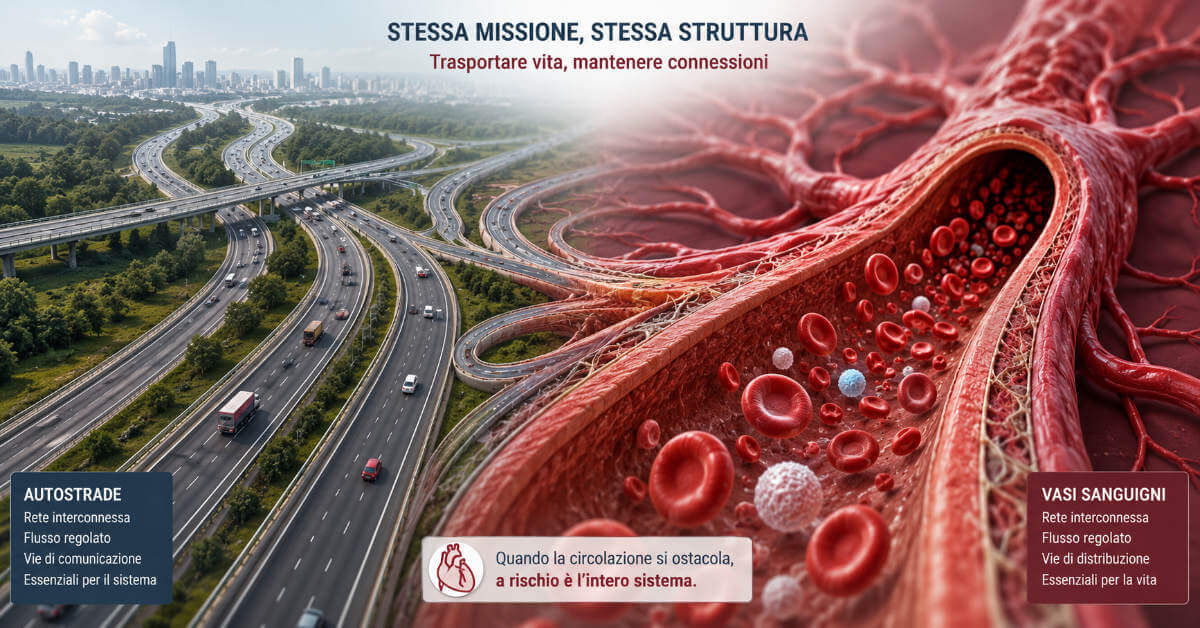
The human body contains over 100,000 kilometres of blood vessels. The largest part of this network, the part invisible to the naked eye, is the microcirculation: capillaries, arterioles and venules that carry oxygen and nutrients directly to cells and carry waste products back to the elimination systems.
When this system works well, the tissues live well. When it loses efficiency, and it does, gradually, over the years, cells receive less of what they need and accumulate more of what they should eliminate. It is a silent process, but crucial for the quality of life in the long run.
Understanding what happens to microcirculation over time means understanding one of the biological roots of tissue ageing.
Blood circulation is often depicted as a system of large motorways – heart, arteries, veins – that distribute blood throughout the body. But it is in the capillary back streets, those less than 100 micrometres in diameter, that the real work takes place.
The microcirculation is the set of arterioles, capillaries and venules that regulates exchanges between blood and tissues. This microscopic space determines how many oxygen molecules reach a muscle cell, how many nutrients reach a neuron and how quickly an inflammatory product is drained away.
It's not just about the amount of blood, it's about the quality of the distribution. Two people may have the same blood pressure and heart rate, but a profoundly different microcirculation. And it is this difference that, over time, produces tangible effects on cell function and tissue recovery capacity.
Vascular ageing is an unavoidable but not uniform physiological process. Some people at age 70 show a microcirculation comparable to that of someone in their 50s. Others, due to genetic factors, lifestyle and chronic stress, see it deteriorate much earlier.
The main changes documented by research concern three distinct areas.
With advancing age, the number of functioning capillaries per unit of tissue surface area tends to decrease, a process known as capillary rarefaction. This means that some areas of muscle tissue, skin or organ parenchyma receive a smaller blood supply, regardless of how much blood is pumped by the heart.
Capillary rarefaction has been observed particularly in skeletal muscles and skin, but it also affects deep tissues. Its progression is associated with reduced aerobic capacity, increased fatigue and slower recovery after physical exertion or stressful events.
The endothelium, the layer of cells that lines the vessels internally, is not a simple passive wall. It produces vasoactive molecules, regulates coagulation, modulates the local inflammatory response and participates in the control of vascular tone. With age, this regulatory function deteriorates progressively.
Aged endothelial cells produce less nitric oxide, the main endogenous vasodilator, and become more sensitive to pro-inflammatory mediators. The result is greater stiffness of the vascular walls, a reduced ability to respond to changes in flow and a tendency towards chronic microinflammation.
Tissue perfusion is the amount of blood passing through tissues per unit of time. When capillary density decreases and the endothelium loses efficiency, perfusion slows down. Tissues no longer receive oxygen with the same speed and continuity.
Under normal demand this slowdown can be compensated for. But when the body is under strain – physical, metabolic or inflammatory – the reserve margin shrinks and the mismatch between oxygen supply and demand becomes significant.
The effects of less efficient microcirculation are not limited to a single organ. Each tissue responds in its own way, but they all share the same root problem: a supply of oxygen and nutrients that cannot keep pace with cellular needs.
Skeletal muscles are among the tissues most dependent on microcirculation. During physical activity, oxygen demand rises to many times the resting level, and the microcirculatory system has to expand rapidly to meet it.
With vascular ageing, this response becomes less rapid and less complete. The practical consequence is a reduction in the capacity for prolonged exertion, a greater accumulation of lactic acid and a slower post-exercise recovery.
The skin is the organ where the signs of microvascular ageing become most visible. The reduction in capillary density in the superficial dermis results in a reduced blood supply to the skin, leading to lower collagen production, reduced thermoregulation capacity and slower wound healing.
But there are also less visible effects: skin with impaired microcirculation is less efficient at removing local toxins, more susceptible to chronic inflammation and more vulnerable to oxidative damage.
Brain tissue is among the most demanding in terms of oxygen and glucose supply. Although it accounts for about 2% of body weight, it consumes 20% of the available oxygen. Its dependence on efficient microcirculation is therefore proportionally very high.
The reduction in brain perfusion with age has been associated with a slowdown in cognitive function, a reduction in synaptic plasticity and, in severe cases, an increased risk of neurodegenerative diseases.
In the public conversation about longevity, we often talk about genetics, diet, exercise, stress. Microcirculation remains a less visible topic, yet scientific evidence suggests that it is one of the determining factors in the body’s ability to stay healthy over time.
A well-perfused tissue is a tissue that can repair its own damage, respond effectively to infections and maintain a balanced energy metabolism. A chronically hypoperfused tissue accumulates oxidative stress, slows down regeneration processes and becomes progressively less efficient.
The healthy longevity is not simply about living a long time: it is about maintaining cellular and tissue function for as many years as possible. And this function depends, to a significant extent, on what happens in the microvascular network that no one sees but that is always at work.
Microcirculatory efficiency is not a fixed figure. It is influenced by lifestyle, habits, levels of systemic inflammation and, increasingly, by targeted clinical interventions that act on the vascular tissue and the biological context in which it operates.
I protocols applied in REAC Inside Blue Zone Longevity Center were developed by the Istituto Rinaldi Fontani, which has been conducting scientific research on the biological mechanisms of ageing and on healthy longevity for decades.
An integrated approach that starts from fundamental biological systems, such as microcirculation, to preserve the quality of cellular functioning over time.
If you want to learn more about how microcirculation connects to other ageing processes, fromchronic inflammation to energy metabolism, explore the other articles on our blog or contact the centre for a personalised consultation.
15 May 2026
Chronic low-grade inflammation can interfere with neurodevelopment in children with ADHD, autism and...
13 May 2026
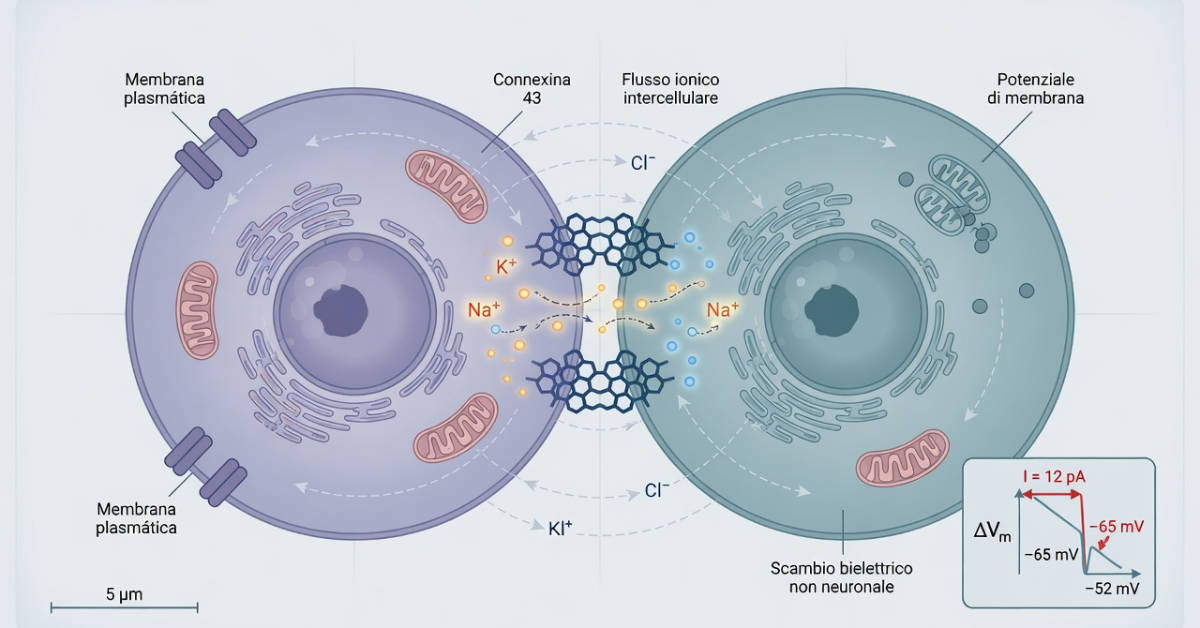
Each cell produces and receives bioelectric signals. Find out how cellular bioelectricity regulates physiology and why...

13 May 2026
Inflammaging is a silent chronic inflammation that grows with age. It does not hurt, but it can speed up ageing...
Find the nearest Longevity Center and ask for a first appointment with the doctor.