
19 May 2026
Microcirculation and longevity: what happens to tissues over time
Microcirculation changes with age and affects the health of each tissue. Find out what happens at the cellular level over ...
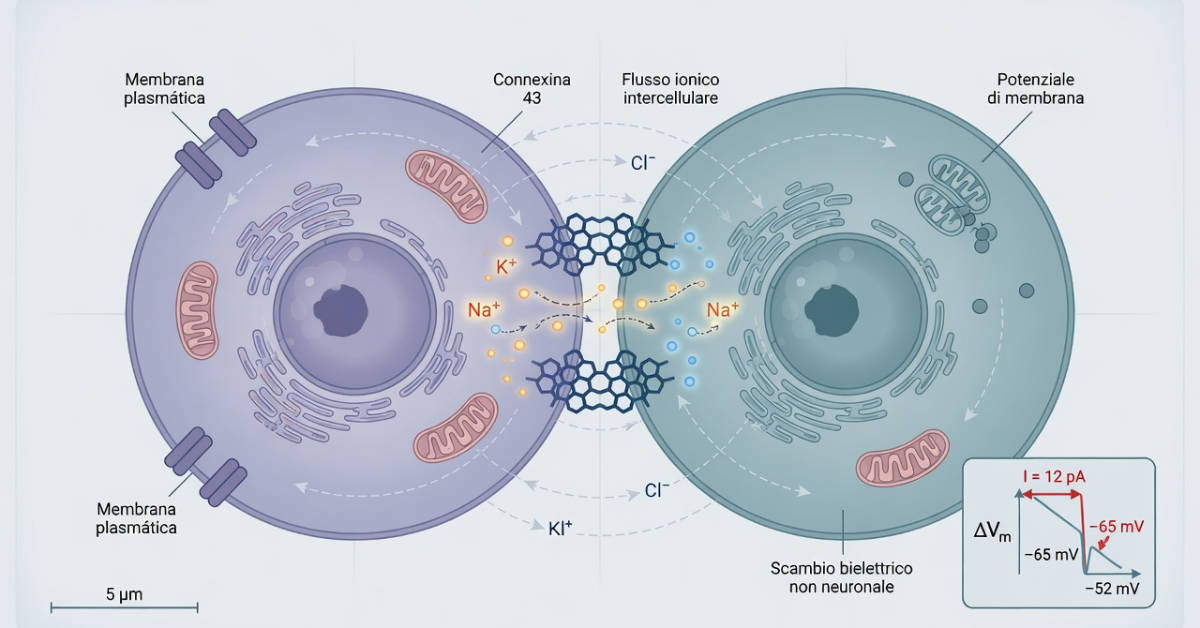
When we think about how the human body works, we think about molecules, genes, hormones, proteins. It's the vocabulary of biology that we've all learned. But there is another level, less known, that operates silently and continuously in every single cell of our body: bioelectricity.
We are not talking about electricity in the sense of electric current flowing through wires. We are talking about something more subtle and sophisticated: the electrical gradients that each cell maintains across its membrane, ion flows, the signals that cells exchange through channels and junctions. A precise, concrete, measurable biological language.
In the popular imagination, bioelectricity is associated with neurons and the heart: the “excitable” tissues, as biology calls them. But research over the past few decades has shown that every cell is to some extent electrical. Each cell maintains a membrane potential, takes part in bioelectrical communication networks with neighbouring cells and uses these signals to orient its behaviour.
Michael Levin, a biologist at Tufts University and one of the most cited researchers in this field, has shown how bioelectric signals play a fundamental role in the development of organisms, tissue regeneration, and the organisation of cells in complex structures. Not as a phenomenon separate from genetics or biochemistry, but as a regulatory layer integrated with them.
In scientific jargon, bioelectricity is said to be an upstream mechanism: it sits upstream of many other processes. It does not replace them – genes, proteins and hormones remain fundamental – but it influences them. It is as if bioelectricity were one of the ‘levers’ through which the body coordinates and directs its physiology.
What happens when this coordination deteriorates? Cells communicate less well. Tissues organise themselves less precisely. Repair capacity declines. Phenomena such as chronic inflammation, reduced microcirculation and metabolic decline may also be partly linked to this: a progressive loss of bioelectrical coherence in the body.
The healthy longevity we are talking about is not just a matter of individual parameters such as blood sugar, cholesterol or blood pressure. It is the body’s overall ability to remain functional, adaptive and capable of recovery. And this ability also depends on the quality of communication between cells and tissues.
It is from this vision that REAC® Technology was born, developed by theIstituto Rinaldi Fontani in Florence. REAC® uses asymmetrically conveyed radioelectric fields to interact with alterations in endogenous bioelectrical activity, according to specific medical protocols. It is not a generic “stimulation” approach. It is a precise intervention on a precise regulatory level, within a structured clinical pathway such as REAC Inside Blue Zone.
Understanding cellular bioelectricity means looking at physiology, and ageing, through different eyes. No longer just as a set of parameters to be corrected, but as a communication system that can lose quality over time and, in some cases, regain it.
19 May 2026
Microcirculation changes with age and affects the health of each tissue. Find out what happens at the cellular level over ...

15 May 2026
Chronic low-grade inflammation can interfere with neurodevelopment in children with ADHD, autism and...

13 May 2026
Inflammaging is a silent chronic inflammation that grows with age. It does not hurt, but it can speed up ageing...
Find the nearest Longevity Center and ask for a first appointment with the doctor.